Bionic Arms
Prosthetics that listen to your muscles. EMG sensors detect tiny electrical signals and translate them into precise grip patterns.
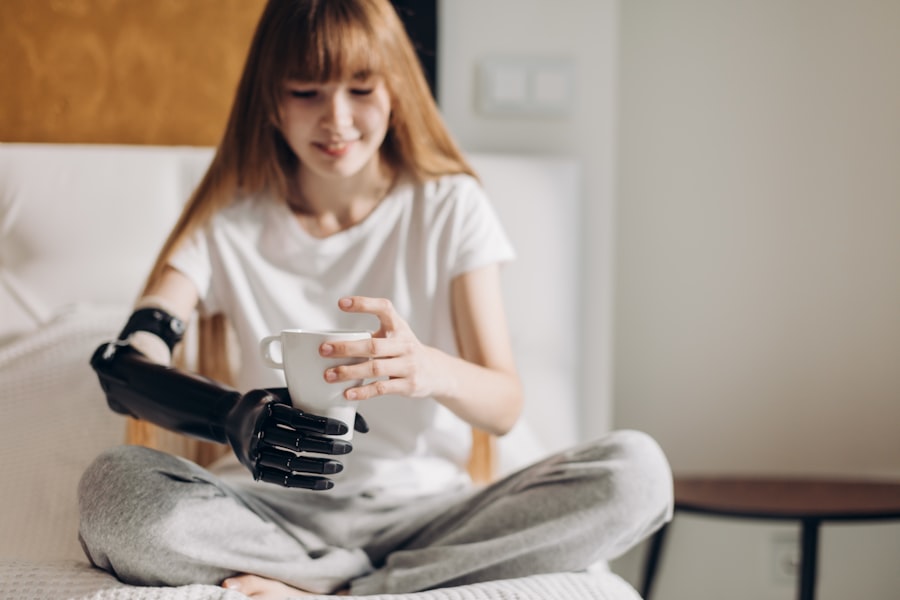
Your Muscles Are Whispering
Even if someone is missing part of their arm, the muscles that remain still receive electrical signals from the brain. Special sensors called EMG sensors can detect those signals -- tiny bursts of electricity measured in microvolts.
Think of it like a tiny microphone pressed against your skin, listening to your muscles whisper commands. When your brain says "close the hand," the muscles fire a signal, and the EMG sensor picks it up instantly.
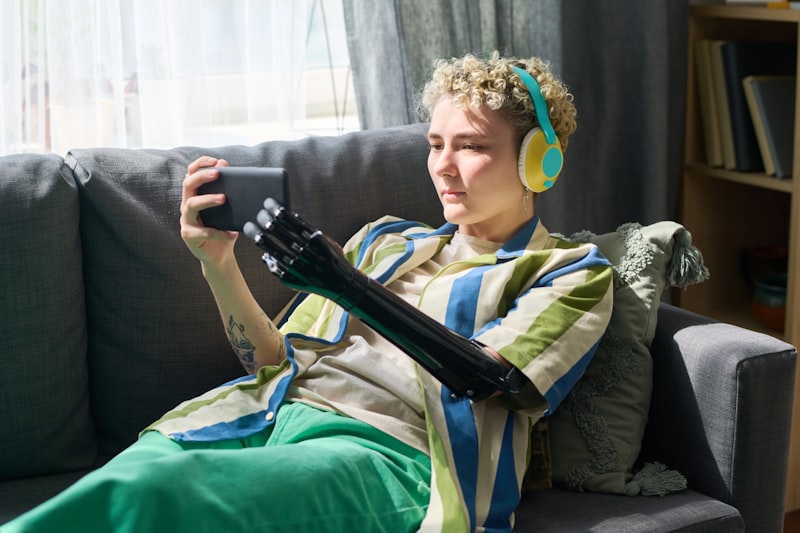
EMG control works like a joystick. When you flex your muscle gently, the bionic hand moves slowly -- like barely pushing a joystick. Flex harder, and it moves faster -- like pushing the joystick all the way. This lets you pick up an egg without breaking it, or grip a ball tight enough to throw.
The Hero Arm: Made for Kids
The Hero Arm by Open Bionics is the world's first clinically approved bionic arm designed specifically for kids aged 8 and up. It comes in superhero-themed designs -- Iron Man, Frozen, and more -- turning a medical device into something young people are genuinely excited to wear.
Most kids learn basic control in about ten minutes. The arm reads two muscle signals (open and close) and translates them into six different grip patterns. It also has a freeze mode that locks the fingers in place -- perfect for holding bike handlebars or carrying objects without constant muscle effort.
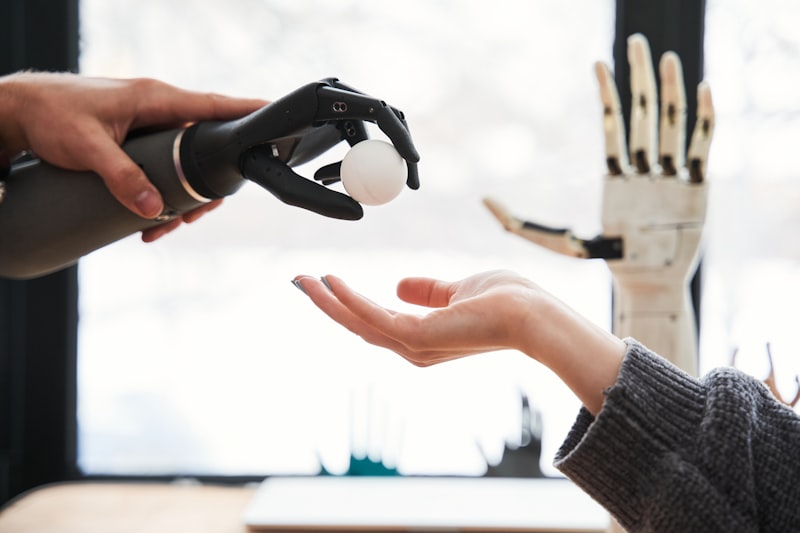
6 Amazing Grip Patterns
The Hero Arm can form six different hand shapes, each designed for a specific type of task. Select each grip to see what it does.
What Bionic Arms Can't Do (Yet)
Bionic arms are remarkable, but they still have real limitations. Users cannot feel temperature -- they have to watch what they are grabbing because the hand cannot tell them if something is hot, cold, soft, or hard.
They also need daily charging, like a phone. And they cost significantly more than mechanical prosthetics, putting them out of reach for many people. Scientists are working on all of these problems, and the technology improves every year.
The Hero Arm has a "freeze mode" that locks your fingers in position. This is perfect for holding bike handlebars, carrying grocery bags, or anything where you need a steady grip without constantly flexing your muscles.
EMG stands for "electromyography" -- electro (electricity) + myo (muscle) + graphy (recording). The sensors detect electrical activity measured in microvolts (millionths of a volt).
The Hero Arm uses machine learning to improve over time. As you practice, the software learns your specific muscle patterns and becomes more accurate. It adapts to you, not the other way around.
The wrist can rotate 180 degrees -- that is actually more rotation than most people's natural wrists can achieve.
Test Your Knowledge
Q1. What do EMG sensors detect?
Q2. How many grip patterns does the Hero Arm have?
Q3. What can't bionic arms do yet?
References
- Hero Arm -- Multi-Grip Bionic Arm -- Open Bionics.
- Myoelectric Control of Prosthetic Hands -- National Library of Medicine, 2018.
- EMG-Based Control Strategies for Prosthetics -- Nature.