How Your Body Moves
Your brain is the ultimate supercomputer -- sending electrical signals at 268 mph through a network of nerves to coordinate more than 600 muscles. Understanding this system is the first step to understanding prosthetics.
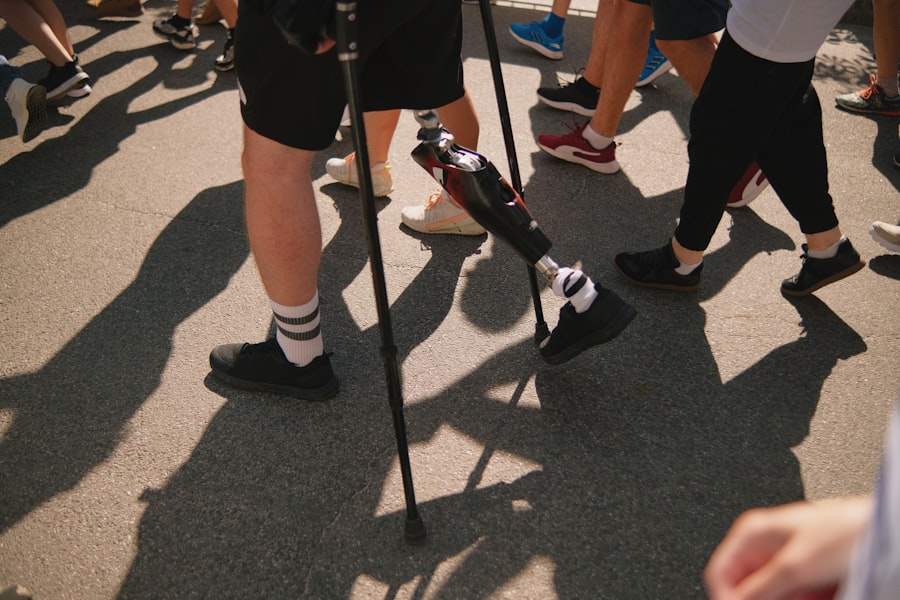
Your Brain: The Ultimate Supercomputer
Every time you decide to throw a ball, turn a page, or take a step, your brain generates a tiny electrical signal. That signal travels through your nervous system at up to 268 miles per hour -- faster than most race cars on Earth.
Think of your nerves as a high-speed communication network. The signal leaves your brain, races down your spinal cord, branches into smaller nerves (like tributaries of a river), and reaches the exact muscles that need to fire. When the message arrives, your muscles contract and movement happens. The entire process takes a fraction of a second.
Your body has more than 600 muscles, and they all coordinate through this electrical signaling system. When you run, dozens of muscle groups fire in precise sequence -- your quads push off, your hamstrings pull through, your core stabilizes, and your arms pump for balance. All of it orchestrated by your brain.
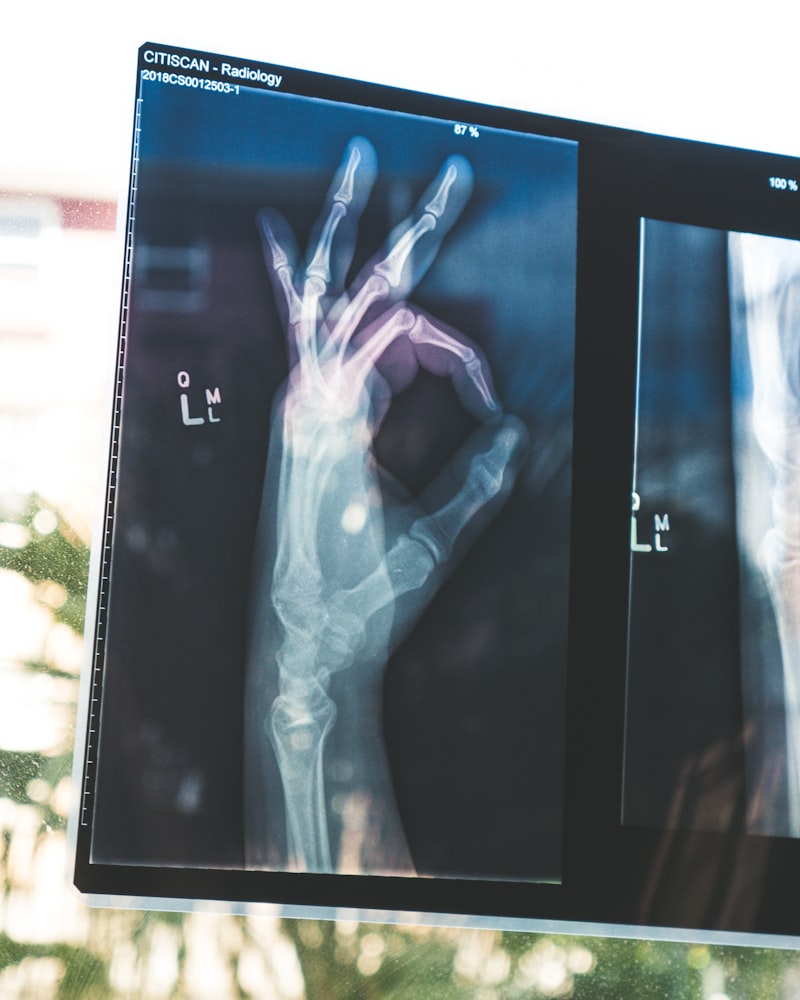
Muscles Are Teammates
Your muscles never work alone -- they always operate in opposing pairs. When you bend your elbow to lift something, your biceps (the muscle on the front of your upper arm) contracts and shortens, pulling your forearm upward. At the same time, your triceps (the muscle on the back) relaxes and lengthens to allow the movement.
When you straighten your arm to throw a ball or push something away, those roles reverse completely. The triceps contracts while the biceps relaxes. One muscle pulls while its partner releases. This push-pull system is how every joint in your body operates, from your fingers to your ankles.
Think of muscles like rubber bands stretched across a joint. When one side tightens, the other side must loosen. If both fired at the same time, your limb would lock in place and you would not be able to move at all. The precision of this teamwork is what prosthetics engineers are trying to replicate.
Your muscles are made of thousands of tiny elastic fibers bundled together -- similar to how a rope is made from many smaller threads. The tendons that connect your muscles to your bones act like strong cables, transmitting the force of each contraction directly to your skeleton. This is why prosthetics engineers study muscle-tendon mechanics so closely when designing artificial limbs.
Why Practice Makes You Better
When you first learn a new skill -- shooting a basketball, playing a chord on guitar, or typing on a keyboard -- every movement requires your full concentration. Your brain is actively figuring out which muscles to fire, how hard, and in what order. It is slow, awkward, and takes real effort.
But something changes with repetition. Your brain builds stronger, faster neural pathways for that specific movement pattern. Eventually, the movement becomes almost automatic. This is what people call "muscle memory" -- although it is really your brain that remembers, not the muscles themselves.
This is the same principle that applies to prosthetics. People who use prosthetic arms or legs practice specific movements thousands of times until the actions become second nature. A person using a bionic hand might initially need to concentrate intensely to grip a cup. After weeks of practice, they can do it without thinking -- just like you do with your biological hand.
Neural plasticity is the brain's ability to physically rewire itself based on experience. When you practice a movement repeatedly, the synaptic connections between the neurons involved in that movement actually grow stronger and more efficient. New connections form, existing ones get reinforced, and the signal pathway becomes a high-speed highway instead of a dirt road.
This same plasticity is what allows people to learn to use prosthetics. The brain adapts to incorporate the prosthetic device as an extension of the body. Research has shown that experienced prosthetic users develop distinct neural patterns -- their brains literally reorganize to control the artificial limb. Scientists call this "embodiment," and it is a major area of active research in biomedical engineering.
Nerve signals travel at speeds up to 268 miles per hour. Different types of nerves carry different messages: motor nerves tell muscles to move, while sensory nerves send information about touch, temperature, and pain back to the brain. Modern prosthetics can send commands from the brain, and researchers are actively working on sending sensory feedback back to the brain as well.
Test Your Knowledge
Q1. What does your brain use to tell muscles to move?
Q2. How many muscles does your body have?
Q3. What is muscle memory?
References
- Nerve Conduction Velocity -- StatPearls / National Library of Medicine.
- Muscular System: Facts, Functions & Diseases -- Live Science.
- Neuroanatomy, Upper Motor Neuron Lesion -- StatPearls / National Library of Medicine.
- Neuroplasticity -- Dana Foundation.