Running Blades
Carbon fiber springs inspired by the fastest animal on Earth. These J-shaped blades return up to 90% of running energy with every stride.
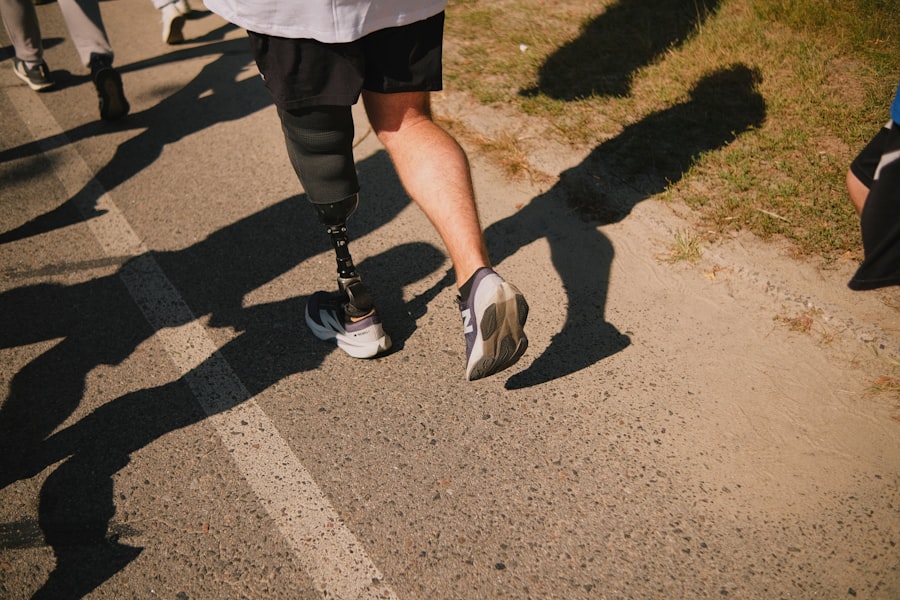
Inspired by Cheetahs
A cheetah's back legs store and release energy like coiled springs with every stride -- that is the key to being the fastest animal on Earth. Engineers studied this mechanism and copied it with J-shaped carbon fiber blades that work on exactly the same principle.
Carbon fiber is the same ultra-strong, ultra-light material used in Formula 1 cars and fighter jets. It can absorb enormous forces without breaking and weighs almost nothing, making it the ideal material for a prosthetic built for speed.
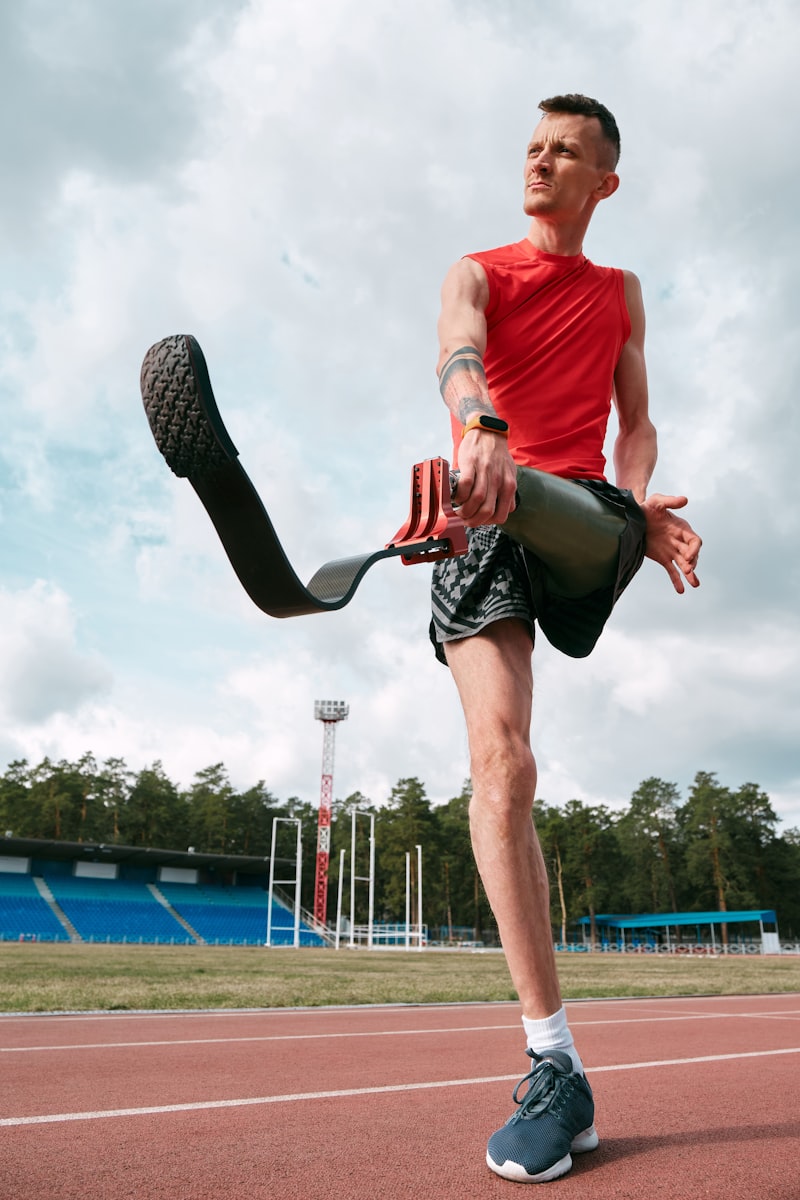
The company Össur makes one of the most famous running blades, and it is actually called the "Flex-Foot Cheetah" -- named directly after the animal that inspired its design.
The Physics of Springs
When the athlete's foot strikes the ground, the blade compresses and stores energy -- just like pressing down on a spring. As the blade snaps back to its original shape, it releases that energy forward, propelling the runner into the next stride. No batteries, no motors -- just physics and precision engineering.
Released -- energy pushes forward
Click to see how the blade stores and releases energy, just like a spring.
Running Blades vs. Walking Prosthetics
Running blades are fundamentally different from everyday walking prosthetics. When you run, your heel never touches the ground -- you push off from the ball of your foot and your toes. That is why running blades have no heel at all and are shaped purely for forward propulsion rather than standing stability.
Cheetah Leg
Long, curved hind limb that stores elastic energy in tendons and ligaments. No heel contact during a sprint. Built by evolution for explosive speed.
Running Blade
J-shaped carbon fiber curve that stores elastic energy on impact. No heel. Engineered to mimic the same spring mechanics as the cheetah leg.
Walking Prosthetic
Has a heel and foot shape. Designed for balance, comfort, and all-day wear. Supports body weight during standing. Looks like a natural foot.
Running Blade
No heel at all. J-shaped spring curve optimized for speed and competition. As light as possible. Made by companies like Össur and Ottobock.
Össur produces the "Flex-Foot Cheetah" for adult and elite athletes, while Ottobock makes the "Runner Junior" -- a blade specifically designed for young athletes who want to run track, play with friends, and participate in PE class.
The Ottobock "Runner Junior" is made specifically for kids under 13. Every young person deserves the chance to run, and these blades are engineered to grow with them.
The science behind running blades is called "elastic energy return." When the carbon fiber bends, it stores potential energy (like pulling back a slingshot). When it snaps back to its original shape, that potential energy converts to kinetic energy (forward movement).
A human Achilles tendon is actually very efficient -- it returns about 93% of stored elastic energy. But the overall human leg system loses energy at joints, in muscle contractions, and through ground impact, so less of the total energy makes it into the next stride. Running blades are a simpler system with fewer energy losses, returning up to 90% of the energy from each step. However, blades cannot generate NEW force like muscles can -- they can only return what you put in. That is why the athlete's strength still matters enormously.
Test Your Knowledge
Q1. What animal inspired the design of running blades?
Q2. What material are running blades made from?
Q3. Why don't running blades have a heel?
References
- Running Prosthetics -- Flex-Foot Cheetah -- Össur.
- Runner Junior -- Prosthetic Blade for Young Athletes -- Ottobock.
- Running-Specific Prostheses Limit Ground Force -- Journal of Experimental Biology, 2008.
- Elastic Energy Storage in the Achilles Tendon -- National Library of Medicine, 2013.